

By Julia Asper
Years ago, in my early 20s,, I took a flight to Frankfurt, Germany to visit my grandmother’s extended family.
Then, I took a train around the mountains to Bavaria (Southern Germany) to visit my Opa’s extended family.
Today, I’ll share about an evening meal in the Bavarian countryside.
One afternoon, we went on a drive through the country and what surprised me was the distinct difference between countryside and village.
When we drove through the countryside it was just farm lands of wheat or hillsides of vineyards.
Then, we would drive under an official stone arched entrance into a village with many homes and small businesses.
Next, we drove out of the village through another distinct edifice, and again we drove through the farmlands until we entered another distinct village.
Farmers have land for their work and villages had space for their trades.
Farm-to-Table Dining
That evening we dined at a farm. We sat outside at a round table at dusk between some barns with lights hung on a strand. I remember it was maybe just us, or perhaps just one or two other tables.
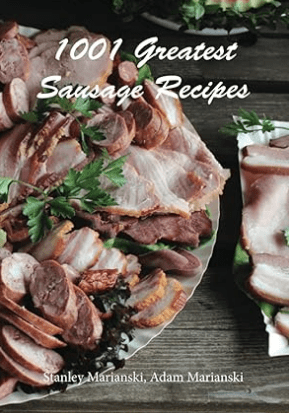
At this authentic farm-to-table experience, the farmer presented so many different round varieties of sliced pre-cooked sausage served on a platter.
Blut sausage and Leberwurst (liver-sausage), were there. My naive mind wondered, “Why so many choices?”
My distant cousin explained all the foods in such a jolly, confident German accent. I politely stuck to the more common looking choices, and had a nibble of the others.
Germany is known to have over 1,000 types of sausages or Wurst, which is pork plus optional other parts ground up finely.
What I did not understand, is that the farmer took great pride in all the recipes for sausage. The recipes were creative in the economy of using all the parts of an animal like organ meats (like liver).
The small scale farmer doesn’t want to waste the animal since he (and she ) raised and tended to the animal by hand.
Therefore, now, when I order one of our pastured hogs to be processed, I too take careful thought to learn all the different selections possible.
If I don’t learn, then fatback, hocks, neckbones, etc., valuable food, will all be in the trash. While I don’t like pork liver and other organ meat or soup bones, at least someone I know can take it make pet food .
(Our American sausage is basically just pork meat, fat, seasonings. You’d have to request the raw ingredients to make your own traditional sausage recipes at home on your own if you wanted to add other ingredients to your creations for more nutrition.)
This will be a series of posts about memories I have and distinct types of animal proteins and fats that you may not know about that are loaded with nutrition and flavor.
Nothing here will be “too adventurous” food-wise, so no worries.
Rather, we’ll learn about
- rendering lard and
- how I’m making soap with it,
- Some more German memories with tips on making ultra nourishing DIY broth/stock,
- Value of fatback in traditional country cooking of France, Italy and Germany,
- how the older generations got more Culinary use out of bacon,
- explore how/why to cook neckbones and hocks,
- and more for a savory Autumn meal
—-and how many animal fats are actually healthy,
and which fats are horrible for your health, like margarine and most vegetable oils.
Come join us on this journey.
 Asper Family Farm
Leave a comment